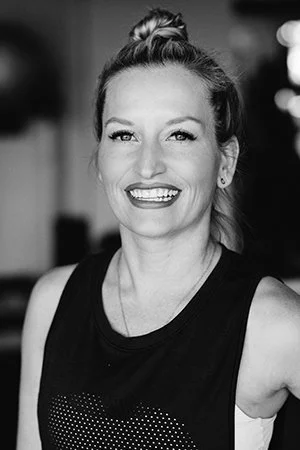
Meet Heather Sholl.
We caught up with the brilliant and insightful Heather Sholl a few weeks ago and have shared our conversation below.
Heather, thanks for taking the time to share your stories with us today Is there a heartwarming story from your career that you look back on?
I do have a story! It’s one of may favorites because you can see the emotional journey we were on and the data behind the transformation! We’ll call it “DENIED, a success story”
How I helped a heart patient get dropped from medical care.
He walked through our doors in 2022 with a quiet kind of courage — the kind you earn the hard way. Cardiac sarcoidosis. A low ejection fraction. Multiple stents. A brand new pacemaker and defibrillator. And a heart that his doctors weren’t sure could be rebuilt.
He’d just completed cardiac rehabilitation at the hospital, and they referred him to us. That referral gave him just enough trust to take one more step forward, thank goodness. He was warm and funny, full of dad jokes and dry sarcasm, but underneath all of it was a man genuinely uncertain about what his body was capable of and whether hope was even worth the risk.
We started slow. Intentional, but slow.
Our exercise physiologist built a program around where he left off at rehab. We tracked his blood pressure and EKG before every session. We monitored his heart rate throughout. We used his Apple watch, then his WHOOP so he could see his numbers and learn. Not to alarm him, but to give him something scary diagnoses often hide: evidence that he could do this. Numbers don’t lie. And his numbers began to tell a different story than the one that diagnosis told him.
He started to feel better – then he started to believe it.
His doctors, at the time, were largely unimpressed by his workout updates. He’d go in excited to share progress and leave a little deflated. But he kept coming back. He knew how he felt. He trusted that effort mattered, even when no one in a white coat was cheering him on.
About a year in, he retested his ejection fraction. It had improved.
His doctors took notice — enough to tell him to keep doing “whatever he was doing.” We tried not to take that too personally!
—
Then came December 2023.
One morning, mid-workout, we noticed something. His heart rate was jumping — under 100 BPM one moment, over 130 the next. He admitted he didn’t feel great. After years and countless hours of workouts, we knew his baseline well enough to know this wasn’t normal for him. We stopped the session early and agreed he would call his doctor the moment they opened.
He called. They admitted him to the hospital that same day. He was there for a week.
It was serious. He needed an ablation. But the team at the hospital alluded to the idea that his consistent exercise over time had been a difference maker in how well his heart handled the procedure. And the monitoring we had been doing, session after session, gave him and his doctors something invaluable — real, specific, observable data. Not just “I feel off.” Proof. The kind that gets you admitted and treated versus sent home to wait.
He came back to us a month later.
—
He was different. The procedure and the medications had taken something from him, and he knew it. It was hard for me to see that. There were dizzy spells. Limits on head movement and lying flat. Frustration in waves. But his body remembered exercise. It wasn’t starting from zero — it was starting from experience. And there is a profound difference.
We built a new program around where he was. We celebrated small wins out loud and tracked modest progress on paper. Slowly, measurably, he began to rebuild.
He had become the kind of client who contributed to the gym experience — cracking jokes at whoever was nearby, groaning through the hard sets, drawing laughter out of the people training around him. That never changed. What I saw then was how much this place had become a fixture in his life. The rhythm of it. The staff. The familiar faces in his time slot. A space where he knew he could say the scary things out loud — wrapped in sarcasm, cushioned in humor — and know that everyone in earshot was rooting for him. The gym had become part of his life, and I think he accidentally liked us. :)
While he was in the hospital, everyone asked about him, sent prayers, held space for his return. When he walked back through that door, the relief in the room was real.
—
Then the news came that sobered all of us: he was added to the heart transplant list.
He had made peace with the idea that sarcoidosis — scar tissue on the heart — has no cure. He was shifting his focus toward preparing his body for the hardest surgery of his life.
We supported that. We showed up for that version of him completely.
But quietly, privately — we had a different plan.
While he trained for a transplant, we were training him out of needing one. We didn’t say it out loud. We just worked. His calendar was now filled with appointments — six cardiologists, a clinical dietitian, anti-rejection specialists, endocrine specialists, concierge care physicians. Not one of them prescribed exercise. The additional support he was receiving — dietitian guidance, specialist check-ins — came in the form of standardized protocols and generalized information. There was nothing individualized, nothing built around who he actually was or how he actually moved through the world. By that point, we had hundreds of hours together. He knew it, and we knew it. He still tried to trust the systems around him, as anyone would. But his real support infrastructure was trucking along at the gym in his everyday life.
We continued with gusto anyway.
We even referred him to a Facebook community for people on the heart transplant list — recipients and hopefuls alike. It shook him. Seeing the daily reality of life after a transplant — the lifelong medications, the relentless monitoring, the never-ending specialist appointments, the constant management of survival — made him stop and reconsider the path he had been quietly accepting. It was exactly the honest, uncomfortable perspective he needed. He was mad at me – might still be mad- about that!
He came back recommitted. Quietly, stubbornly, characteristically himself — recommitted to making progress on his own heart.
—
It was around this time that we noticed something in the data.
His pacemaker had a setting, a kind of governor, that was capping his heart rate during exercise in a way that was actually limiting his progress. We brought it to his doctor. They adjusted the setting.
The results were remarkable.
His strength began to climb past what we see in people without cardiac conditions. His dizziness — which had plagued him for months — improved significantly. He requested to reduce several medications, and his doctors approved it. His cardiovascular health improved enough that we converted one of his 30-minute sessions to pure cardio work.
And then — two years after his hospitalization — he received a letter from Methodist Hospital.
He had been removed from the transplant list.
The reason listed on the form: too healthy to qualify for cardiac transplant.
I never told him this, but I cried my eyes out that night.
—
He is still here. Three days a week, thirty minutes a session. He works with our Functional Nutritionist. And in his cardio sessions these days?
He jogs.That’s right – JOGS! Not far, not fast, but … HE. JOGS.
And his wife has finally joined him here too.
He is unassuming and cantankerous and privately generous and deeply kind. He is sarcastic in the way only truly self-aware people can be. He is authentically, completely himself — in a world that kept giving him reasons to shrink, he just kept showing up.
He has learned to appreciate hard things. He understands his body more than he ever imagined he could. And somewhere along the way, what started as one careful step after cardiac rehab became a life he is genuinely, measurably, happily living.
He is my hero. And I am so proud to know him.
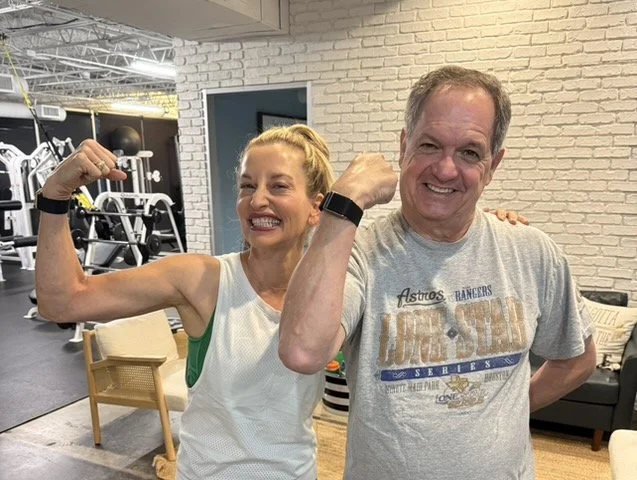
Awesome – so before we get into the rest of our questions, can you briefly introduce yourself to our readers.
Sure! I’m Heather Sholl, and I own The Villages Gym | 8811. here in Houston.
I’ve been a personal trainer for almost 30 years, and somewhere along the way I realized something that changed how I think about all of this: most people don’t need more health information. They’re drowning in it. Between social media, conflicting advice, and ten-minute doctor’s appointments, it’s really hard to know what actually applies to your body. And that uncertainty leaves people frustrated, discouraged, or just stuck.
My clients weren’t failing because they lacked motivation. They were missing clarity. They wanted someone to help them understand what their body was telling them, and then tell them what to do next.
That really shifted the direction of my career. Over time, we took what was a boutique personal training gym and turned it into a full wellness practice, (8811.) one that bridges the gap between healthcare and everyday life. We use meaningful health assessments and pair them with personalized coaching, so people actually understand their bodies, make informed decisions, and build habits they can stick with.
And honestly, what makes us different isn’t any one service. It’s how we pull it all together into one clear, practical plan. Most people are left to figure out exercise, nutrition, stress, and their doctor’s recommendations on their own. We help them see how all those pieces connect, and then we coach them through actually living it.
A couple of things I’m really proud of. One is our partnership with Boot Campaign, where we work with veterans recovering from the invisible wounds of service through comprehensive wellness coaching. The other is our clients. We have people who’ve been with us for years, and I think that’s because they know we care about them as people, not just as members or patients.
If there’s one thing I’d want people to take away, it’s this: your health shouldn’t just be something that happens to you between doctor’s appointments. With the right education, the right data, and the right coaching, you can understand your body, make confident decisions, and really own your health, and your life. That’s what we get to help people do every day.
Are there any books, videos, essays or other resources that have significantly impacted your management and entrepreneurial thinking and philosophy?
The resource that has had the greatest impact on me as an entrepreneur is the Entrepreneurial Operating System (EOS), introduced in the book Traction by Gino Wickman.
I discovered EOS when I had just one employee. At the time, I assumed systems and organizational structure were things large companies worried about. I quickly learned that was backwards. The earlier you build a strong operating system, the easier it is to grow without chaos.
EOS completely changed the way I lead. It helped me separate the business from myself by creating clear roles, accountability, documented processes, measurable goals, and a shared vision. Before that, every decision felt personal because everything lived in my head. As the owner, I was the system.
Implementing EOS forced me to build a business that could function because of great processes—not because I happened to be there to answer every question. It gave my team clarity, gave me the confidence to delegate, and created a culture where everyone understands what success looks like.
That philosophy has shaped every stage of our growth. As we’ve expanded from a small personal training gym into a comprehensive wellness practice, EOS has provided the framework to scale while protecting the culture and client experience that matter most to us.
If I could recommend one resource to a new entrepreneur, it would be Traction. It taught me that building a successful business isn’t about working harder—it’s about building systems that allow great people to do their best work together.
Can you tell us about a time you’ve had to pivot?
The biggest pivot of my career is the one we’re living through right now.
For more than two decades, we’ve been known as a boutique personal training gym. We built an incredible reputation helping people through exercise, and I’m deeply proud of that. But even as our clients became healthier, I kept seeing the same pattern: exercise alone wasn’t enough. People needed help understanding their lab work, managing stress, improving nutrition, building better habits, and connecting all of those pieces to the recommendations they were receiving from their healthcare providers.
Long before “wellness” became a national conversation, that’s the direction we were heading.
Today, we’re transforming our business from a training studio into a comprehensive wellness practice that helps people understand their health and take ownership of it. It’s exciting because the conversation around prevention, patient advocacy, and personal responsibility has finally caught up to what we’ve believed all along.
The challenge is that while our business has evolved, our reputation hasn’t caught up yet. Many people still think of us as “the gym,” when in reality we’re helping clients navigate much bigger questions about their health. Changing a business model is difficult. Changing how your community thinks about your business is even harder.
What’s given me confidence is knowing we’re not chasing a trend—we’re growing into the vision we’ve been building for years. The equipment may look familiar, but our purpose has expanded. We still believe exercise is one of the most powerful tools in healthcare, but it’s now part of a much bigger mission: helping people understand their bodies, make informed decisions, and realize they have far more influence over their health than they’ve been led to believe.
This pivot has reminded me that entrepreneurship isn’t just about adapting to change. Sometimes it’s about having the patience to keep building until the rest of the world is ready for the solution you’ve believed in all along.